Oman, 06.–15.03.2015
Herping outside of Europe for the first time: a field trip to the southeast of the Arabian Peninsula. The Team: Jürgen Gebhart (snake hunter with Oman experience) GertJan Verspui (herping machine), Philip de Pous (scientist), Peter (that's me). The trip was announced as a snake trip, but we found much more – 50 species in total.
6.3. – Sleepless in Muscat
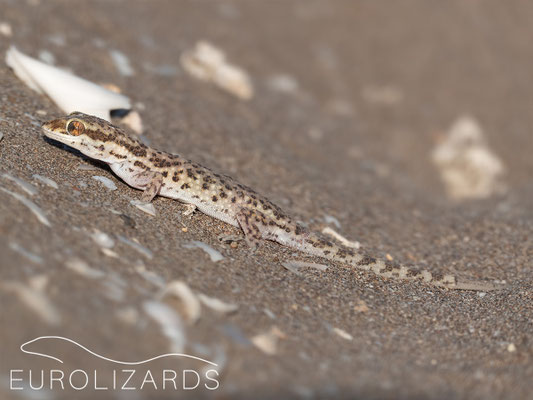
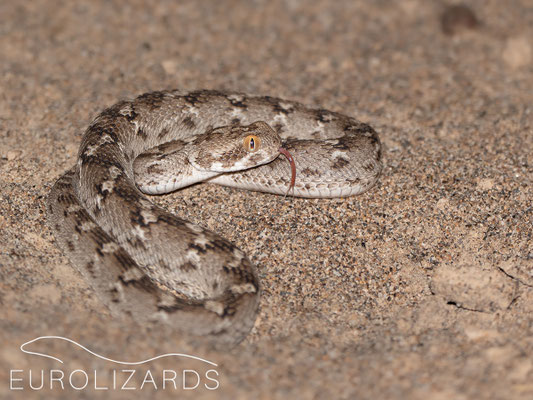
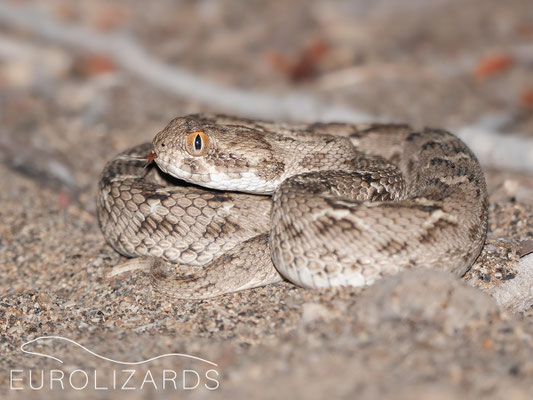
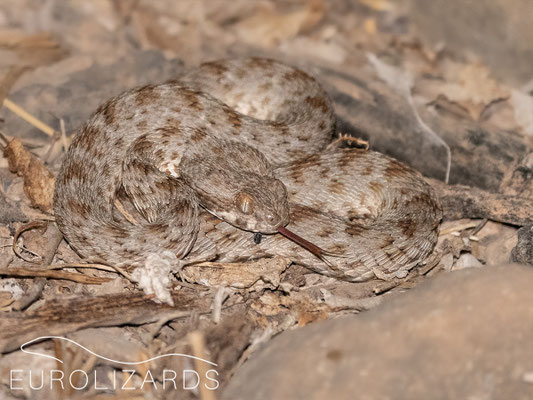
The 7 a.m. flight from Düsseldorf brought me to Munich, where I met Jürgen Gebhard. There, we took the plane to Muscat and arrived at 9 p.m. local time (time difference: + 3 h). As we had some hours left until the arrival of our colleagues, we hired a car for a first night trip at a coastal area close to the airport. There, Jürgen immediately started searching for geckos and snakes – while I was still busy with my camera settings (Note to myself: If you want to do a night excursion, find out first how the flash light works – beginner’s mistake # 1). Half an hour later – Jürgen already had found numerous geckos (Stenodactylus leptocosymbotus) and two Echis carinatus – my camera finally was ready for use. After some hours of herping we headed back to the airport where we met GertJan and Philip. After a sleepless night in the departure hall we took the 8 a.m. flight to Salalah in the south of the country.

7.3. – Exotic creatures
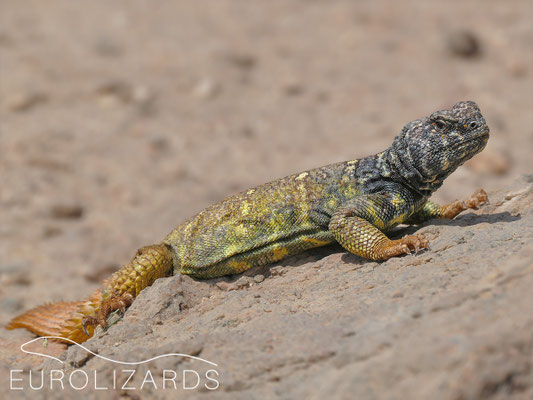
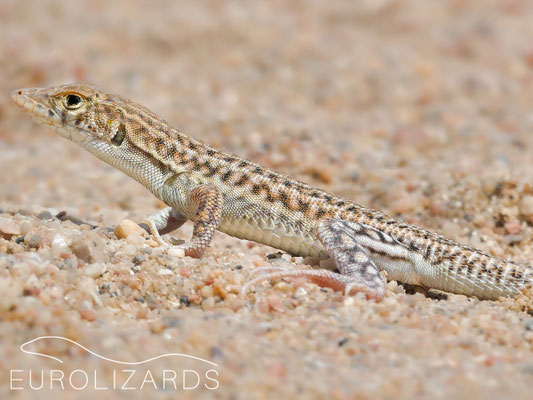
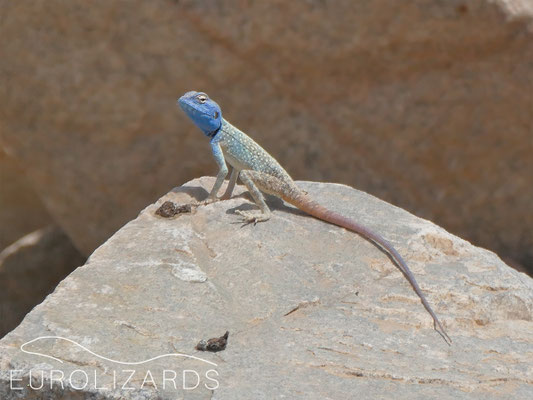
In Salalah we received our rental car and went to a promising coastal habitat close to the city of Mirbat, a place with a quite exotic scenery: Jumping dolphins in the water, mudskippes (Periophthalmus sp.) crawling on the sea cliffs, blue-headed Pseudotrapelus dhofarensis and colourful Uromastyx benti sitting on the barren rocks of the coastal plain, diurnal geckos (Pristurus carteri and Pristurus rupestris) and hectic lizards (Acanthodactylus felicis) scurrying on the ground.
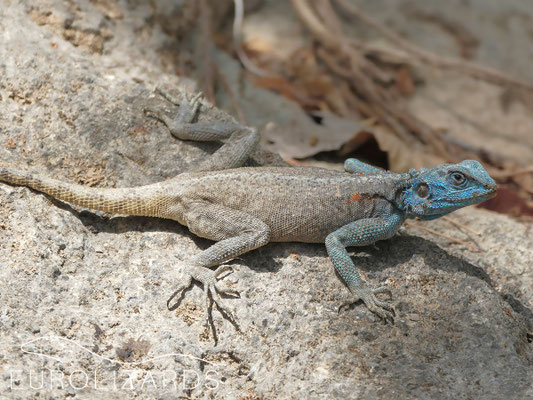
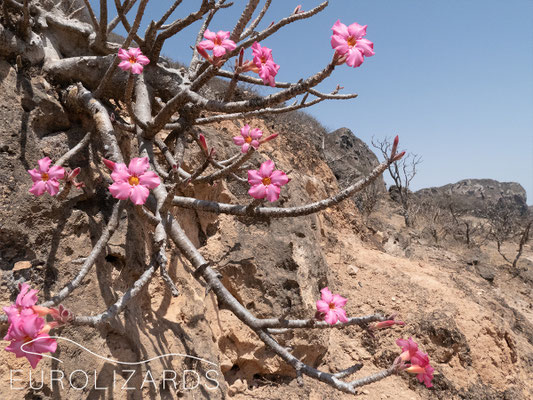
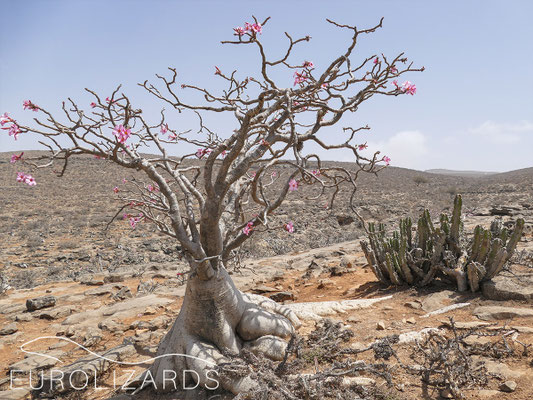
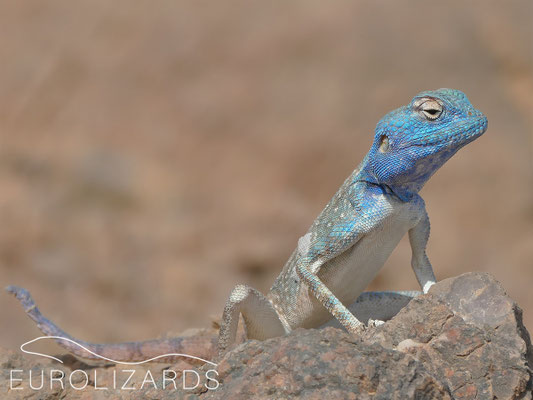
In the afternoon we visited a valley with large Baobab trees (Adansonia digitata). Despite of this African flair, the search for snakes wasn’t successful here. But nevertheless I was able to photograph a beautiful blue-headed agama, which I considered as another Pseudotrapelus and therefore didn’t give much attention to this. But later, when we reviewed the pictures, it turned out that it had been the much rarer Acanthocerus adramitanus. I got a ticking-off from Jürgen who of course would have loved to photograph this species, too (Note to myself: Get familiar with the local herpetofauna before you go on a field trip – beginner’s mistake # 2).
After dinner, we left for a night excursion at a coastal wetland where we expected to find chameleons (Chamaeleo arabicus). Unfortunately, we didn’t see any chameleon, but Jürgen found a nice Echis khosatzkii. This area was also inhabited by hordes of aggressive mosquitoes – lucky those team members which didn’t forget the mosquito repellent. Tired and some of us speckled with mosquito bites we arrived at the hotel at 11:30 p.m. – time to sleep, finally!



8.3. – Little ghosts
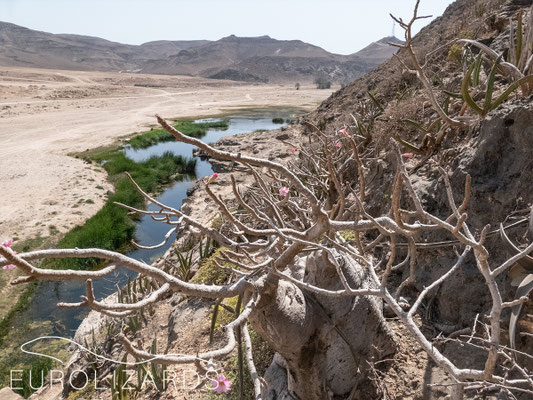
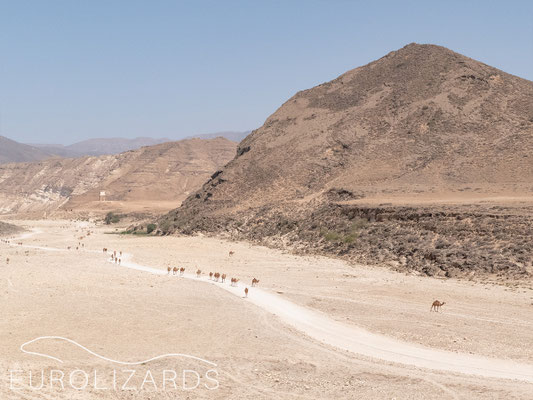
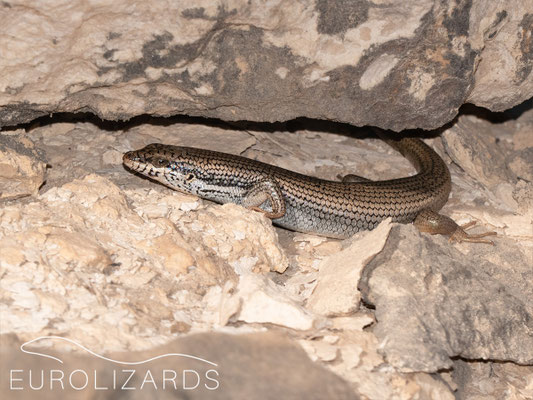
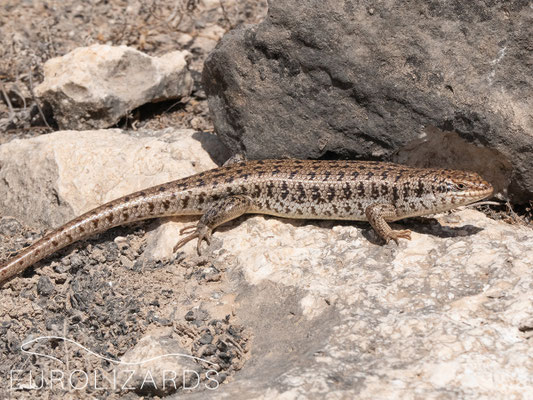
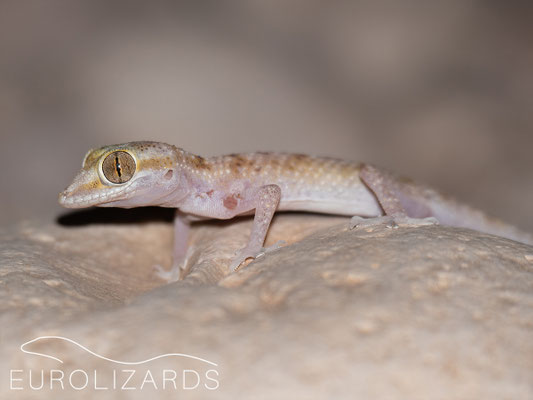
In the morning we went to a valley west of Salalah where we hoped to find cobras. Our snake hunters searched every corner – without success: nothing but geckos and skinks … and numerous camels. In the afternoon we went to a spectacular rocky coast. The same here: geckos and skinks.
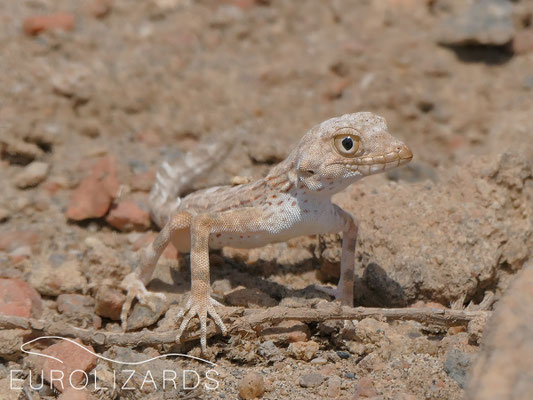
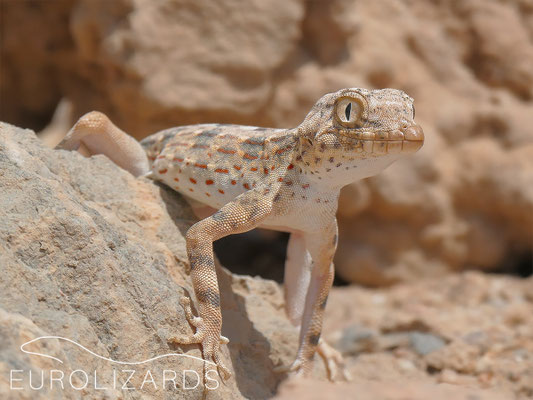
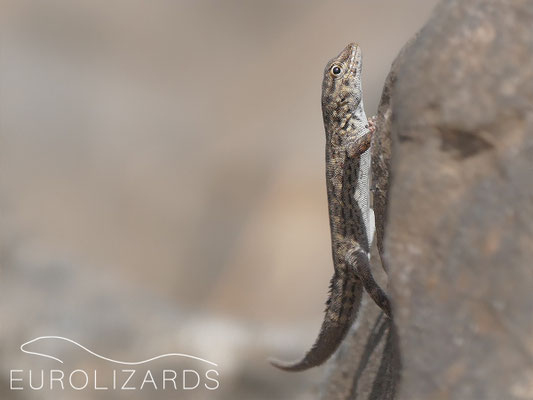
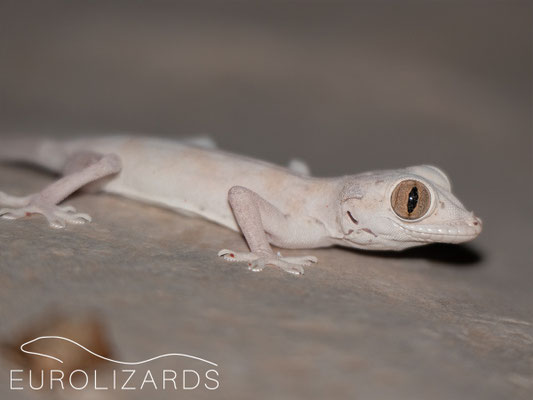
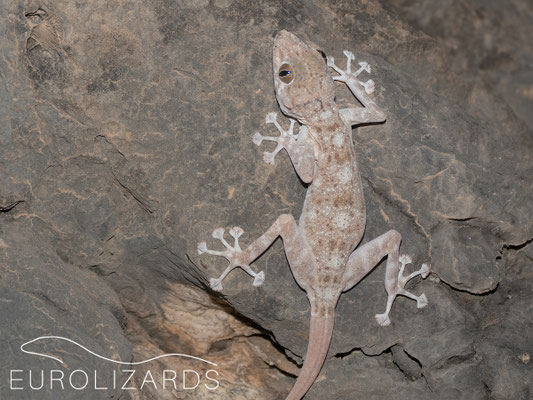
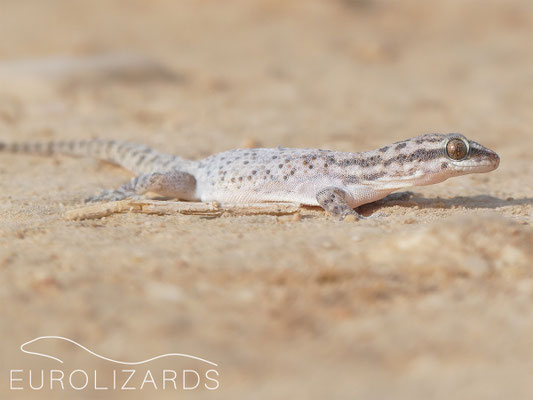
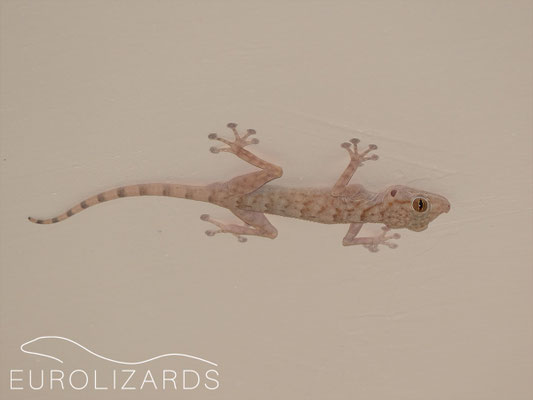
Also the evening excursion to a remote wadi did not yield any snakes. Thus, some team members (their names will not be told) got somewhat grumpy. But anyhow, after sunset this valley turned out to be a great place: In the moonlight we found spectacular geckos (Hemidactylus lemurinus) climbing on the pale rocks of the wadi – like little ghosts with big eyes and white coloration; a fantastic spectacle at this quiet and lonely place.


9.3. – Frustration tolerance
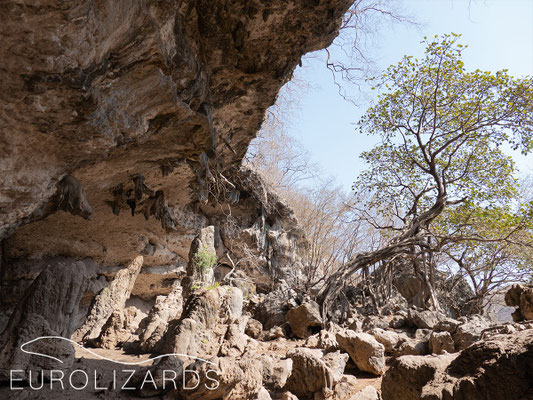
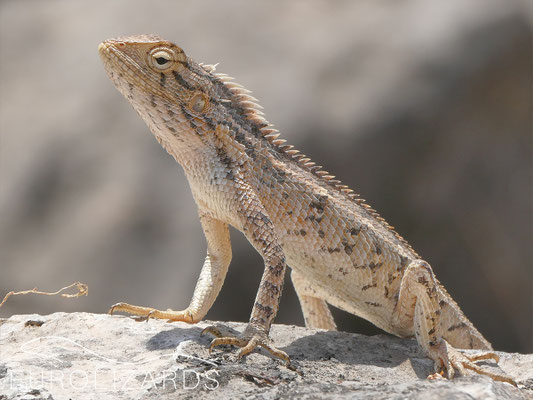
This day there were two tourist attractions on our list: the famous Wadi Darbat with its subtropical flora and the vertical cave at Tawiattir (a big hole in the ground). Both the lush Wadi and the barren area around the cave are inhabited by the Calotes versicolor, an introduced species from South Asia that seems to be quite flexible in its habitat choice: In forested areas it lives on trees and in treeless habitats it can be found on bare rocks. The members of our team were not too enthusiastic about this invasive species: GertJan preferred to kill his time by allowing a snake (Psammophis schokari) to escape and Jürgen discovered his new passion as a bird watcher.
In the evening we visited a mountain plateau to search for Echis coloratus. At nightfall our snake hunters resolutely trudged into the night while I still walked somehow undecided along the roadside. Suddenly, I noticed some hissing in front of me and realized that obviously a snake felt quite disturbed by my presence. In the light of the torch I watched a pale coloured Echis slowly disappearing into a pile of rubble. Even after GertJan (which I had called for help) had removed about a ton of stones, the snake remained untraceable, regrettably (Note to myself: Never go searching for Echis without gloves and snake hook – beginner’s mistake # 3).
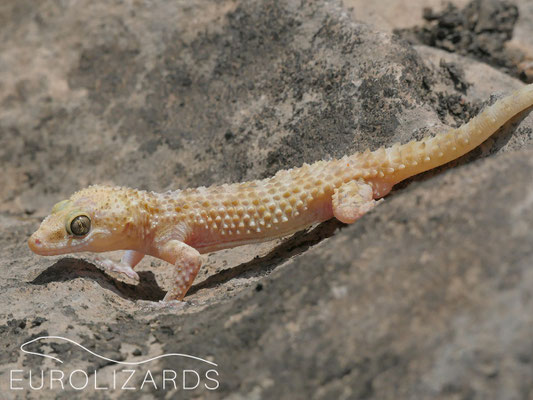
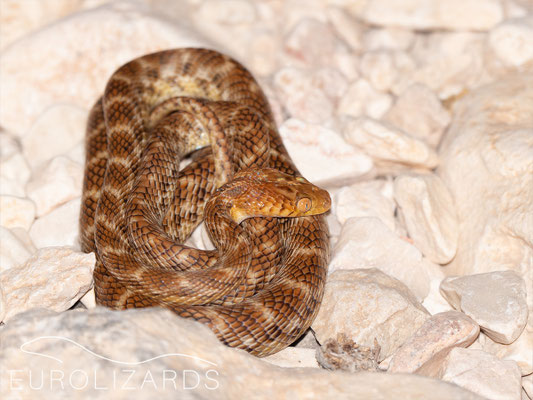
Snake hunters have a legendary high tolerance for frustration – so we continued our search in a nearby wadi. Here, no Echis was found but GertJan made our day by catching a Cat Snake (Telescopus dhara).


10.3. – Inconspicuous findings
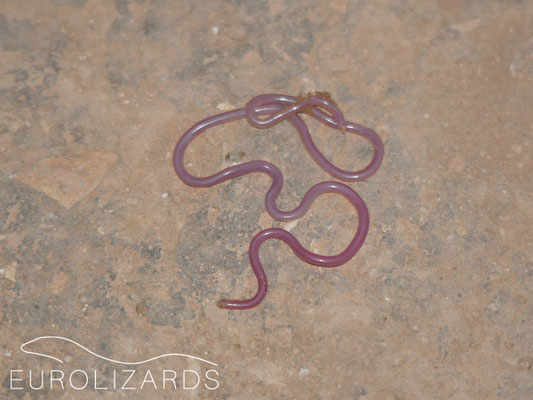
In the morning we went to a beach at Salalah and found – congrats! – two snake species: First, Jürgen discovered Myriopholis macrorhyncha under a rock (a tiny worm snake with the body diameter of a thin Asian rice noodle). Then I found Myriopholis nursii (another worm snake whose body diameter can be compared with overcooked spaghetti). Actually, the latter one was obviously the first record of this species in southern Oman and insofar, at least from a scientific perspective, a remarkable finding.
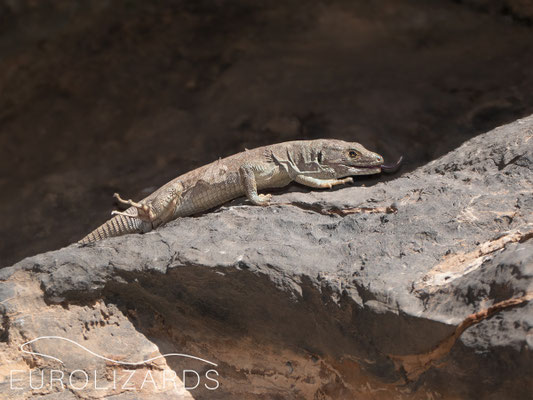
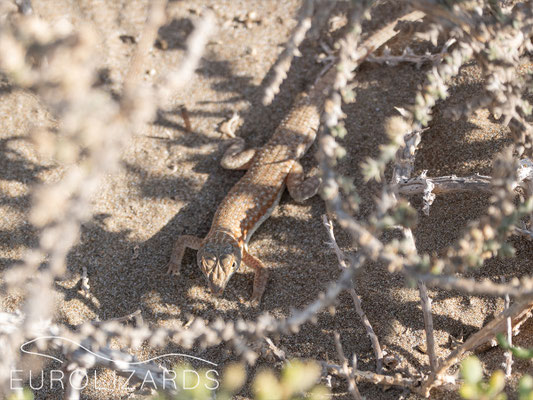
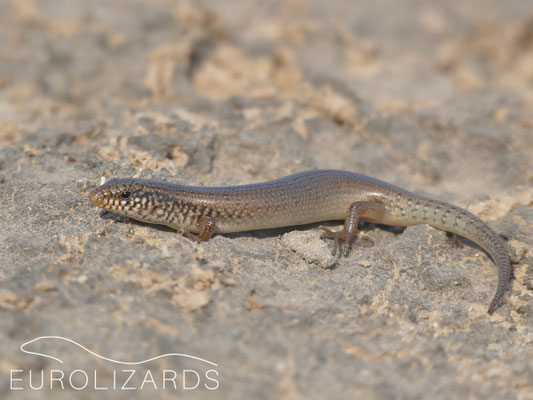
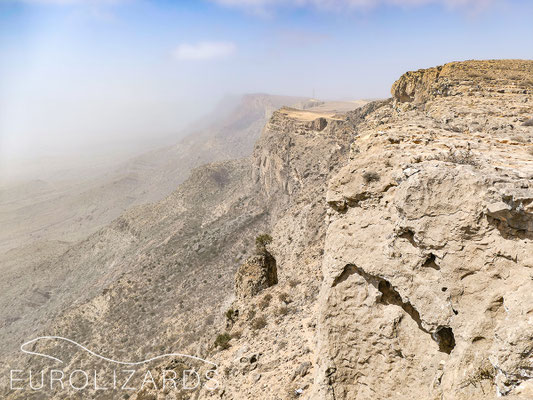
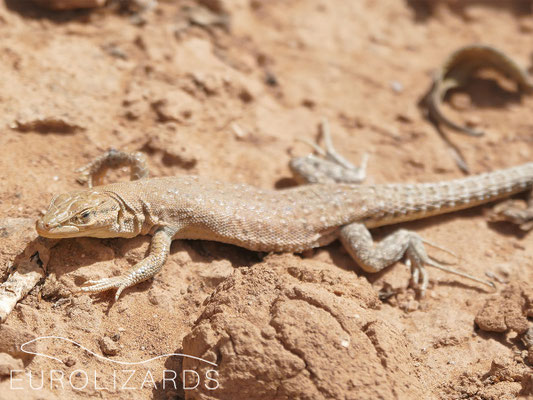
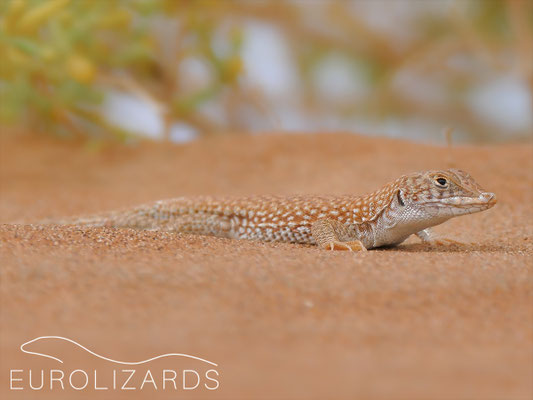
Philip recommended visiting a nearby mountain plateau where we hoped to find a lizard species which formerly has been referred to Mesalina adramitana but probably represents a distinct species. So we started searching: traced, found and photographed. After taking pictures of this admittedly unimpressive gray-brown lizard and given the increasing heat of the afternoon, the team's motivation to continue the hunt for reptiles was decreasing significantly. But GertJan – an icon of iron discipline – put his foot down and so we went to the coast to search for Pseudotrapelus: Even in full afternoon sun these Agamas are basking on exposed rocks – great photo models!
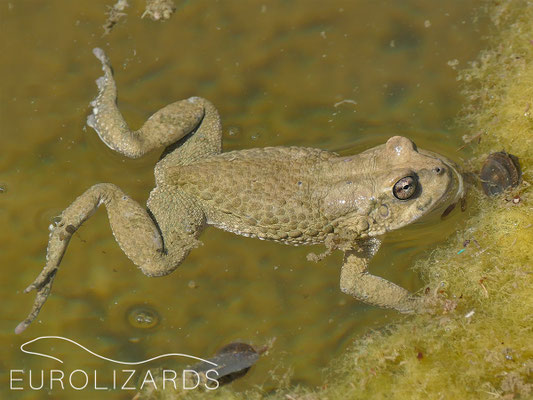
For our night excursion we once again had chosen the legendary Wadi Darbat in which three dangerous snake species were supposed to occur: Naja arabica (Cobra), Bitis arietans (a snake with remarkably potent venom) and Atractaspis microlepidota – a true Hotspot! I was instructed, if I saw a Bitis, not to move, to do nothing and to call for support. Ok, sure: "do not touch anything" – this promised to be really a great evening ... Somewhat huffy I followed the others along the watercourse in the wadi. The scenery was quite impressive: Giant yellow eels were slowly gliding through the water and in the light cones of the headlamps we saw large bats fluttering other our heads. Nevertheless, the result of this excursion was disillusioning: After three hours of intense search we had found - toads! (Duttaphrynus dhofarensis)… and of course a few geckos, nothing else. This valley definitely had lost its reputation as a herping hot spot.



11.3. – Gaining momentum in northern Oman
In the morning we left Southern Oman and flew back to Muscat. There, we received a powerful 4x4 rental car and made our way towards the Wahiba Sands – a sandy desert in the northeast of the country. But first, we had a stopover at a promising rubbish dump in the outskirts of Muscat: Snake hunting! It worked: Under a beautiful piece of corrugated eternit I found a Psammophis schokari. I proudly presented it to the others, but they didn’t really appreciate this: "quite ordinary snake", "can be found everywhere", "Let’s go to the Wahiba Sands" – philistines…
When we arrived at Wahiba Sands we stopped at the first sand dune to search for reptiles. Just before sunset we came across some geckos and GertJan caught the highlight of the day: a sandfish (Scincus mitranus) which, after we had taken a few pictures, escaped and – according to its popular name – dived in the sand.
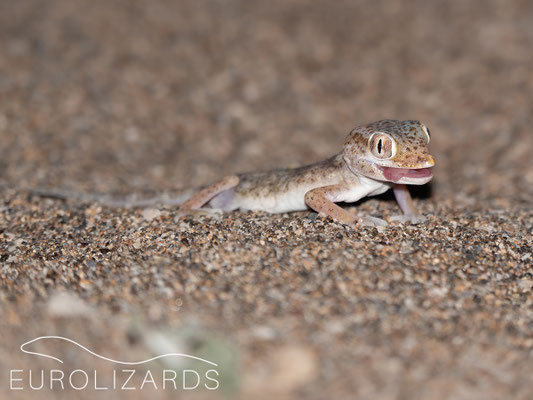
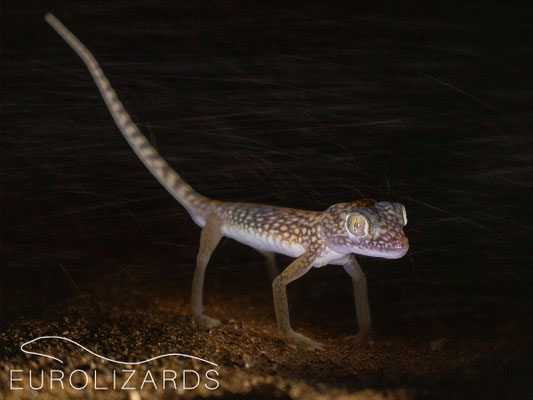
At night we went to the dunes again which were now populated by bizarre geckos: Stenodactylus doriae defied the strong wind and flying sand grains. Disturbed by our headlamps this species demonstrated a strange defensive posture with stretched legs and erected tail. Unfortunately, we couldn’t find any sand boa (Eryx jayakari) – one of our "must have" species – which also occurs in these dunes.




12.3. – Little critters
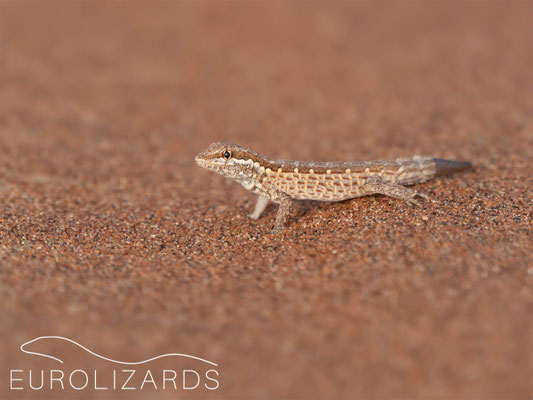
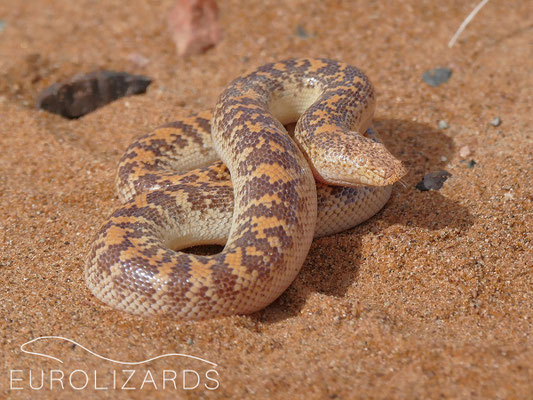
Even before the others got up, GertJan was outside again and (finally!) caught a sand boa. As a reward, he had to bear our kisses... Afterwards, we went to the dunes again: Now, in the morning, numerous Acanthodactylus schmidti were active. These lizards can be fast like rockets but carefully approached they are easy to photograph. Anyhow, we had little time to enjoy the scenery as we had to leave for our next station, the mountains in the north.
Our first goal in the mountains was the Sayq Plateau where we started herping in a small valley. As it was rather cold in the high altitudes of these mountains quite few reptiles were active. We found some day geckos (Pristurus celerrimus and Pristurus gallagheri) and also Ablepharus pannonicus but the latter one escaped in the leaf litter. Even after we had riffled the complete leaf litter with our hands, this tiny critter remained untraceable. We also had little luck with Omanosaura jayakari: These lizards were very shy and photographing a captured juvenile specimen led to unsatisfactory pictures.
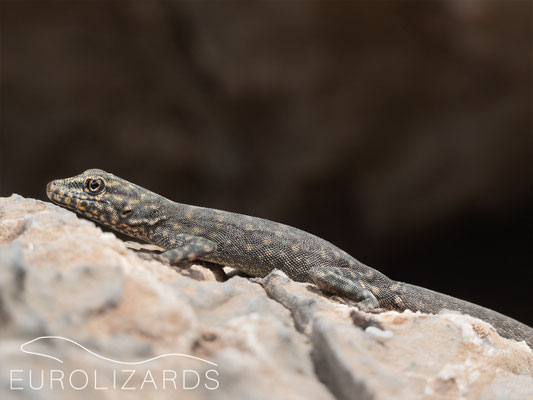
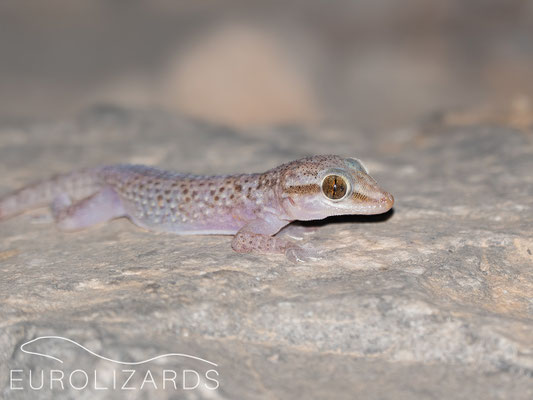
For our night excursion we decided to visit a wadi near the town of Nizwa, where we hoped to find Echis omanensis. But due to the strong wind in this valley our chances to find snakes were low. So we focused our search on geckos. A good decision, as the mountains in the north of Oman are home to several endemic gecko species. Another night trip – familiar scenery: four guys cowering on the ground, pointing with torches and heavy camera lenses at tiny lizards…


13.3. – Mountain rally
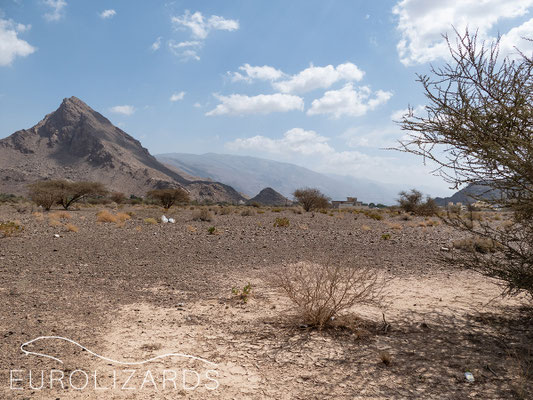
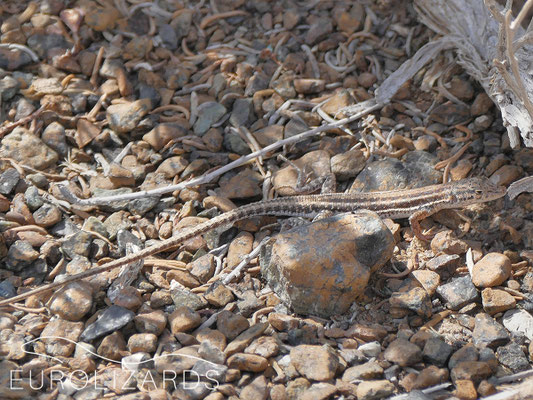
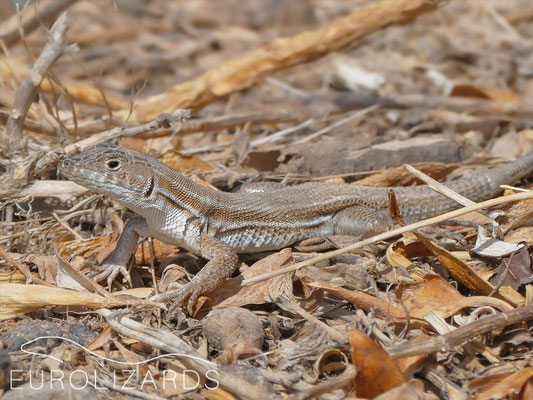
The old town of Manah is built of unbaked clay bricks. Elsewhere, this would be celebrated as a cultural heritage, but here, no one cares about it. Hence, the old buildings get eroded by wind and rain. We also weren’t particularly interested in the ruins of the old town but rather in the day geckos (Pristurus gallagheri) which live on tree trunks in that town - patient photo models! Soon, we left Manah to go to the mountains – with a stopover in a dry and stony shrubland which turned out to be a habitat for two lacertids: Mesalina adramita and Acanthodactylus boskianus.
We drove on, towards the mountains – officially, to search for two agama species (Uromastyx aegyptia and Pseudotrapelus jensfindumi); but probably GertJan simply wanted to test our four-wheel drive. After a bumpy ride we finally reached the area where we hoped to find the agamas. But there was no Uromastyx at all and Pseudotrapelus was so shy that our telephoto lenses at best generated images of documentary value. Next, we went to a promising wadi where we once again took pictures of some geckos.
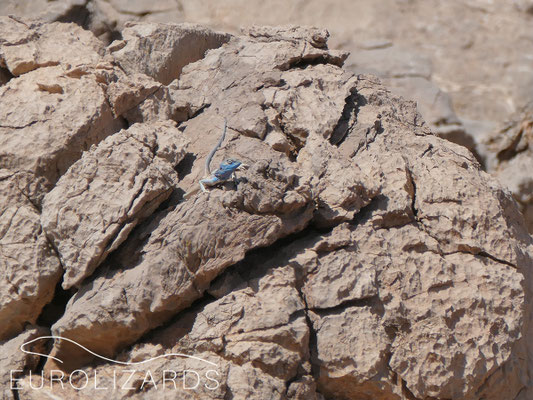
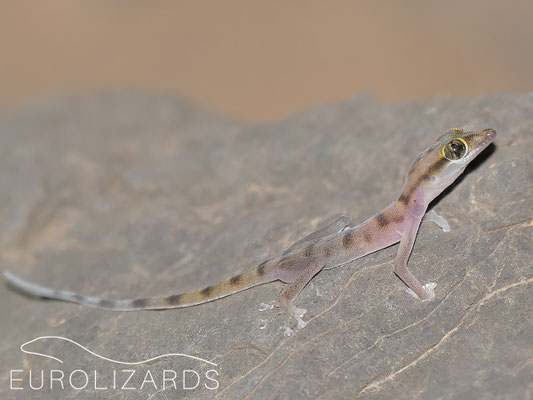
In the afternoon, we drove back to Nizwa – another long ride. After sunset, we went to the wadi we had visited the day before to search for geckos. We were particularly fascinated by Assacus gallagheri, a pretty coloured, tiny species with a remarkable escape strategy: When threatened, this animals try to escape jumping like a frog or a small grasshopper. Hence, photographing this gecko wasn’t that easy, especially since these feathery reptiles were almost blown from the rocks by the strong wind.




14.4. – Finale Grande
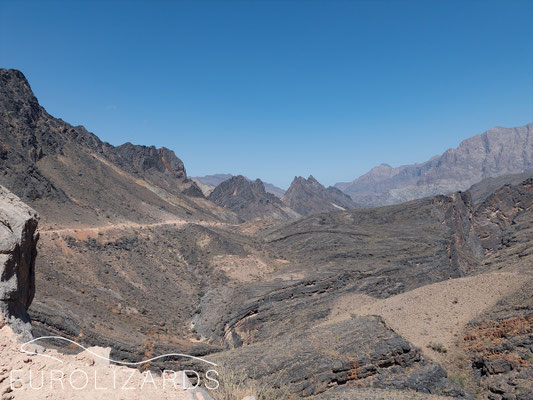
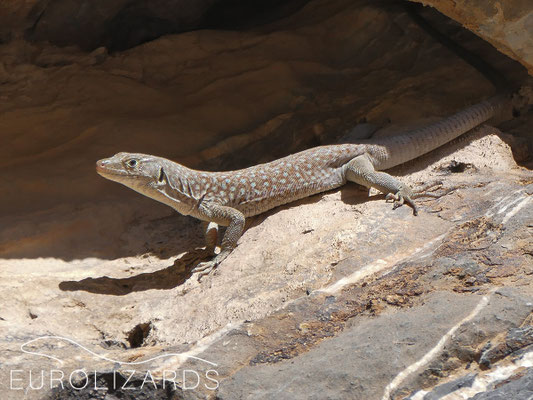
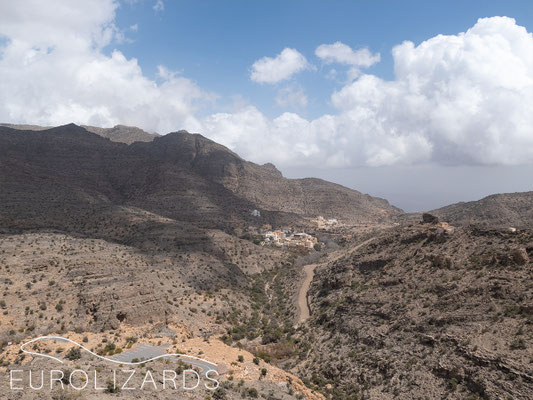
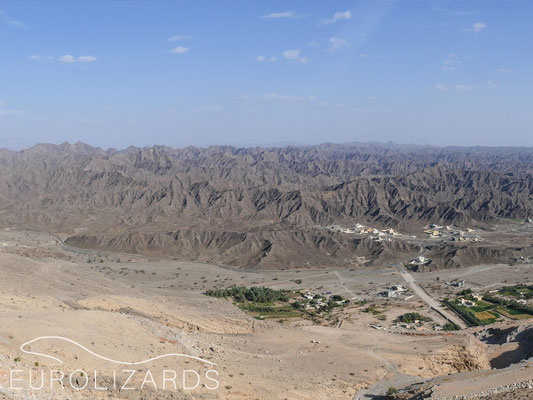
For our way back to Muscat we chose a bumpy mountain road – this "scenic route" demanded a great deal of our fourwheel drive. Admittedly, along this route we were rewarded with fantastic views into the rugged mountains of Oman. However, we got along very slowly on the earth roads and the journey wasn’t that entertaining since Jürgen and GertJan obviously hate talking. So we kept silent and listened to the rumbling noise of the car. I worried that we would spend the last day of our trip sitting in the car without seeing any reptile – so I started to complain... But our strains should be rewarded: We stopped at an oasis surrounded be steep rocks, with a small palm forest and some puddles along a narrow watercourse. Near the water, we photographed a basking juvenile Omanosaura jayakari and some hundred meters further we came
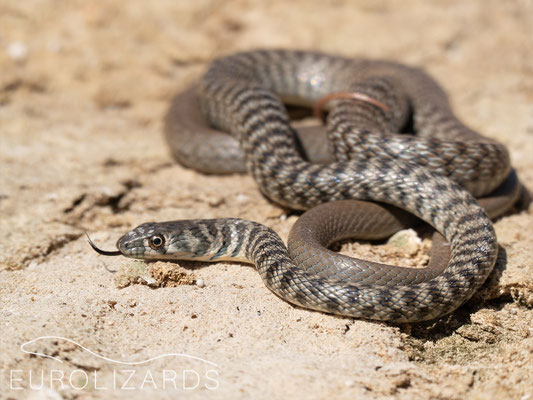
across two adult specimens which had approximately the size of Timon lepidus. But unlike Timon, these lizards weren’t shy at all. In face of the intrusive photographers they calmly, almost trustingly walked about. Some kilometres further, another stopover, another highlight: a Wadi Racer (Platyceps rhodorachis) (Note to myself: Do not complain too early – even long car trips can be worthwhile!).
We drove on towards the coast: the steep mountain valleys got wider and finally we reached the coastal plain of northern Oman. We went to an extensive dune habitat to search for Acanthodactylus blanfordii. We jumped out of the car and while I still tried to find lizard tracks in the sand GertJan (of course, who else?) had already found and photographed a specimen. I would have loved to continue searching for these lizards and try to get better pictures. But apparently the discipline of our crew had decreased at the end of our trip: Parts of the team complained of hunger and so we stopped herping to have some dinner in a nearby restaurant.
After sunset we went back to the coastal habitat Jürgen and I had visited at the first evening and found the same species as the week before. Each of us made acquaintance of at least one Echis carinatus. Admitted: I didn’t find a snake but the snake found me – it hissed eagerly until I finally spotted it (it was sitting in the sand, half a meter next to me). Several Echis and Gecko findings later it was about time for Jürgen and me to say goodbye to GertJan and Philip: GertJan dropped us off at the airport (he and Philip had left one day more in Oman) and we had another long night travelling home. Our flight to Munich started sometime after 3 clock at night and I arrived at Düsseldorf at 10 a.m. (CET).
Many thanks to Jürgen, GertJan & Philip - this was a great adventure!